









In the history of the Academy Awards, few wins have felt as refreshing and culturally significant as Flow (2024). Hailing from Latvia and directed by the visionary Gints Zilbalodis, this independent gem did the unthinkable at the 97th Oscars (2025): it outshined billion-dollar giants from Pixar and DreamWorks to claim Best Animated Feature.
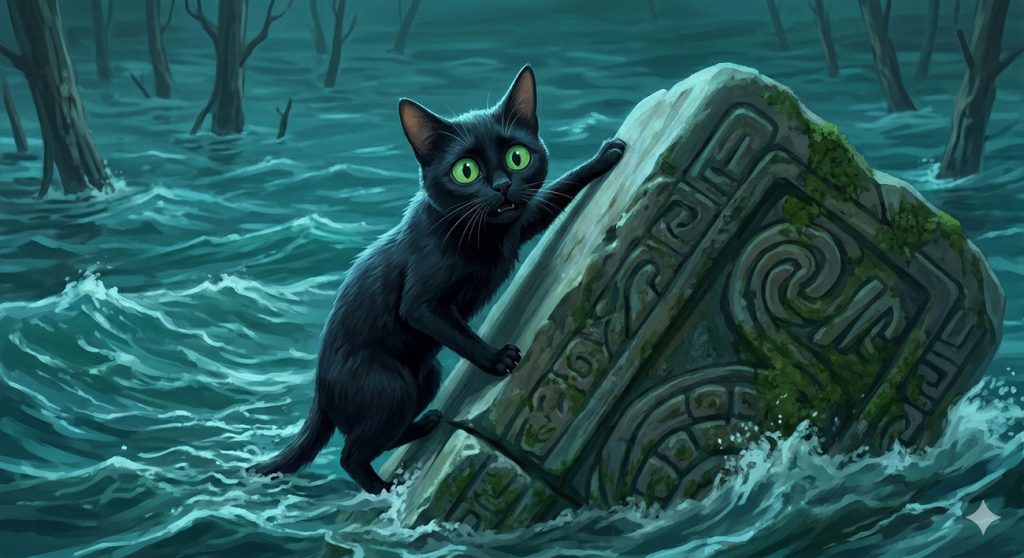
But Flow isn’t just a trophy winner; it is a profound, meditative, and visually staggering experience that proves you don’t need a single word of dialogue to tell a heart-wrenching story about survival and connection.
The Premise: A World Reclaimed by Nature
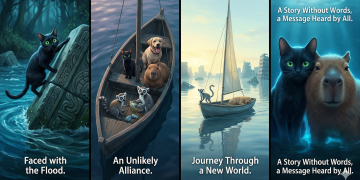
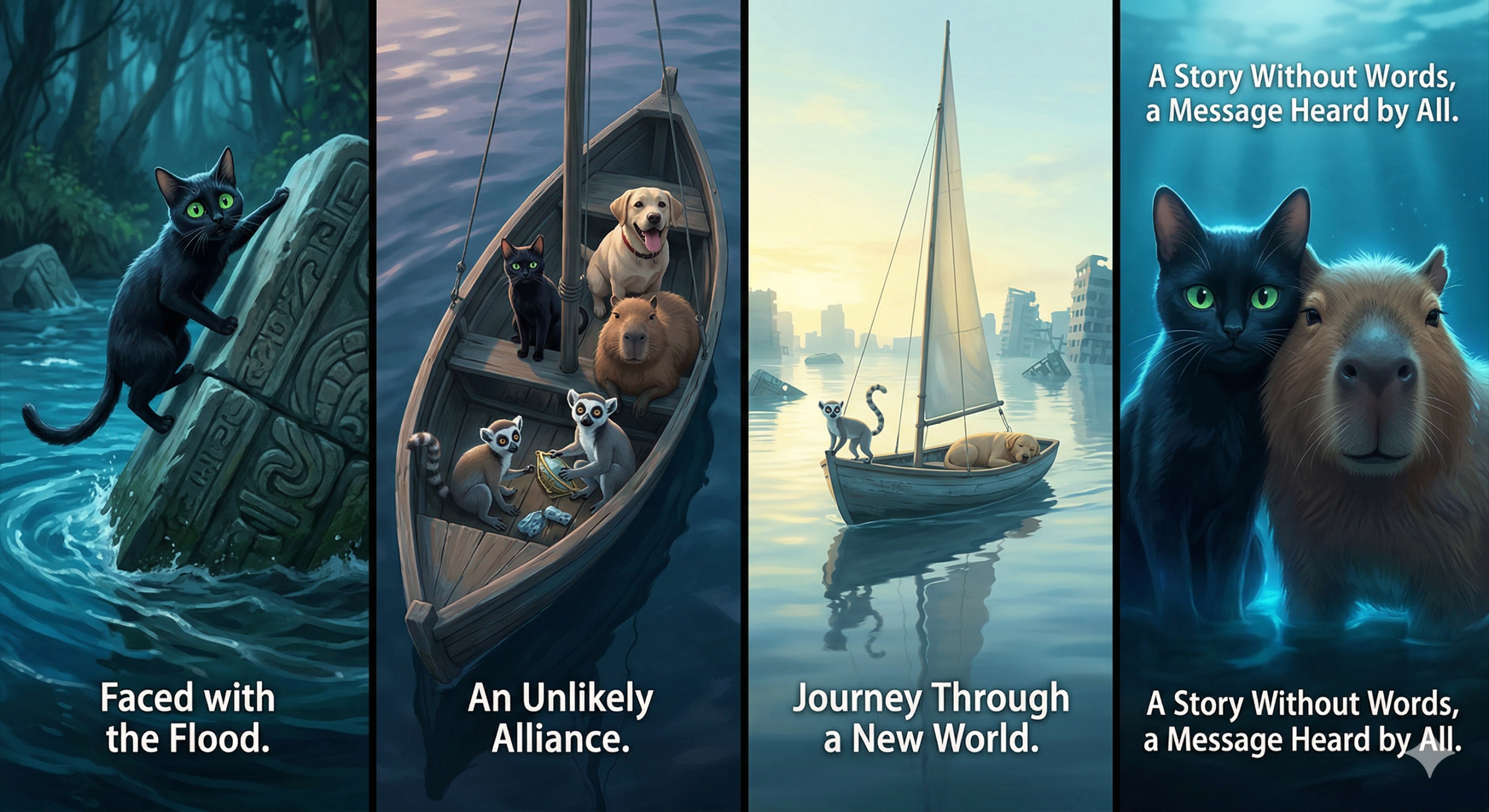
The film transports us to a hauntingly beautiful post-apocalyptic world where humanity has vanished, leaving behind crumbling stone towers and overgrown forests. The protagonist is a Black Cat—stubborn, fiercely independent, and pathologically afraid of water.
When a catastrophic flood begins to swallow the landscape, the Cat is forced to abandon its solitary life. It finds refuge on a small, drifting sailboat, but it isn’t alone. The vessel becomes a literal “Noah’s Ark” for a motley crew of survivors:
- A hyper-active Labrador who just wants to be everyone’s friend.
- A chill, slow-moving Capybara who embodies Zen.
- A hoarding Lemur obsessed with shiny trinkets.
- A majestic but injured Secretary Bird.
The Narrative Arc: From Instinct to Empathy
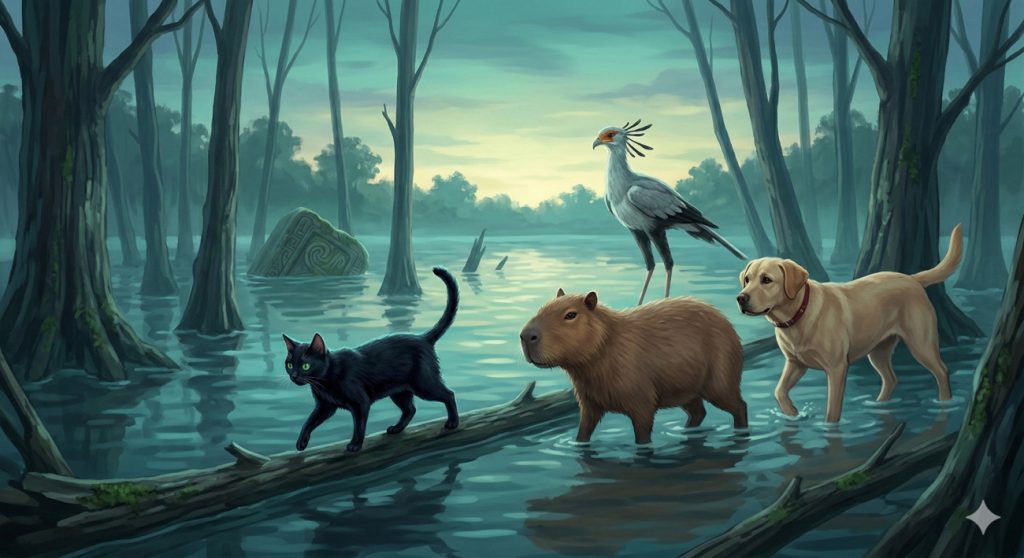
What makes Flow so compelling is its commitment to “show, don’t tell.” Because there is no dialogue, the narrative relies entirely on animal behavior and body language.
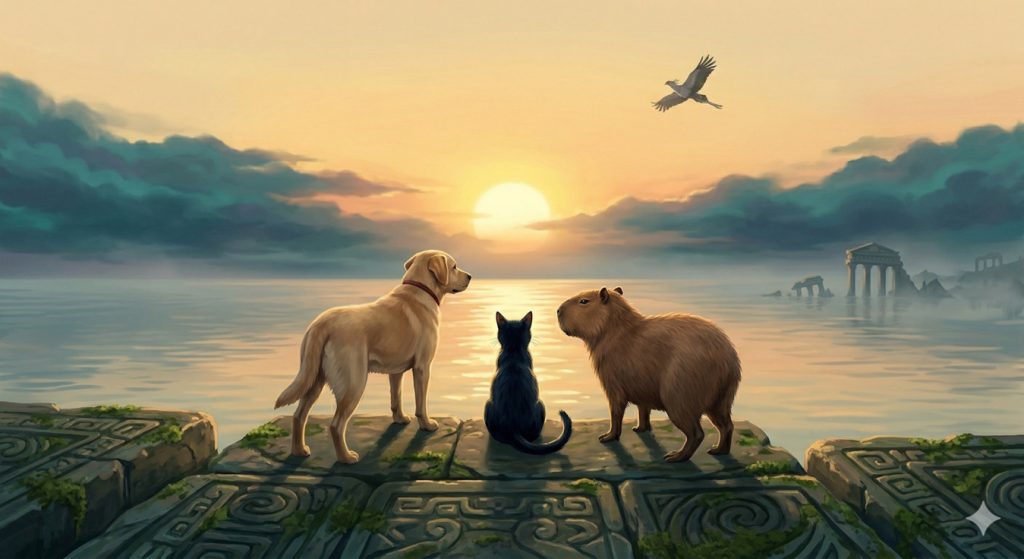
Initially, the Cat represents the ultimate individualist—it doesn’t want to share space or resources. However, as the boat navigates through flooded cities and mystical forests, the predator-prey dynamics dissolve. The film brilliantly explores the transition from biological instinct (survival of the fittest) to social cooperation (survival of the group). It’s a touching metaphor for our own world: when the “flood” comes, our differences matter less than our shared need for a dry place to stand.
A Technical Miracle: The “Blender” Revolution
From a technical standpoint, Flow is nothing short of a miracle. While Disney spends $200 million on a single film, Zilbalodis and his small team utilized Blender (an open-source 3D software) to create a look that feels handcrafted and cinematic.
- The “Long Take” Style: The camera moves with a fluid, documentary-like quality. It follows the animals in long, sweeping shots that make the world feel vast and the stakes feel real.
- The Lighting and Water: The way light reflects off the rising tides is mesmerizing. The water in this film is both a beautiful element and a terrifying, encroaching monster.
- Sound Design: Since there are no voices, the “score” of the film is composed of the environment. The rustling of fur, the creaking of the wooden boat, and the haunting musical score create an immersive atmosphere that pulls you into the screen.
Why Did It Win the Oscar?
Many critics were surprised when Flow beat out mainstream hits, but the Academy’s choice was a nod to pure cinema.
- Originality: In an era of sequels and reboots, Flow offered a completely original vision.
- Universal Language: By removing dialogue, the film became accessible to every human on Earth, regardless of language.
- Emotional Depth: It manages to make you cry for a 3D-rendered cat more than most live-action dramas do with human actors.
Final Verdict
Flow is a rare achievement. It is a “silent” film that speaks volumes about loneliness, the environment, and the necessity of kindness. It is a visual feast that demands to be seen on the largest screen possible.
Rating: 10/10 A must-watch for cinephiles, animal lovers, and anyone who appreciates the “art” in eighth-art.